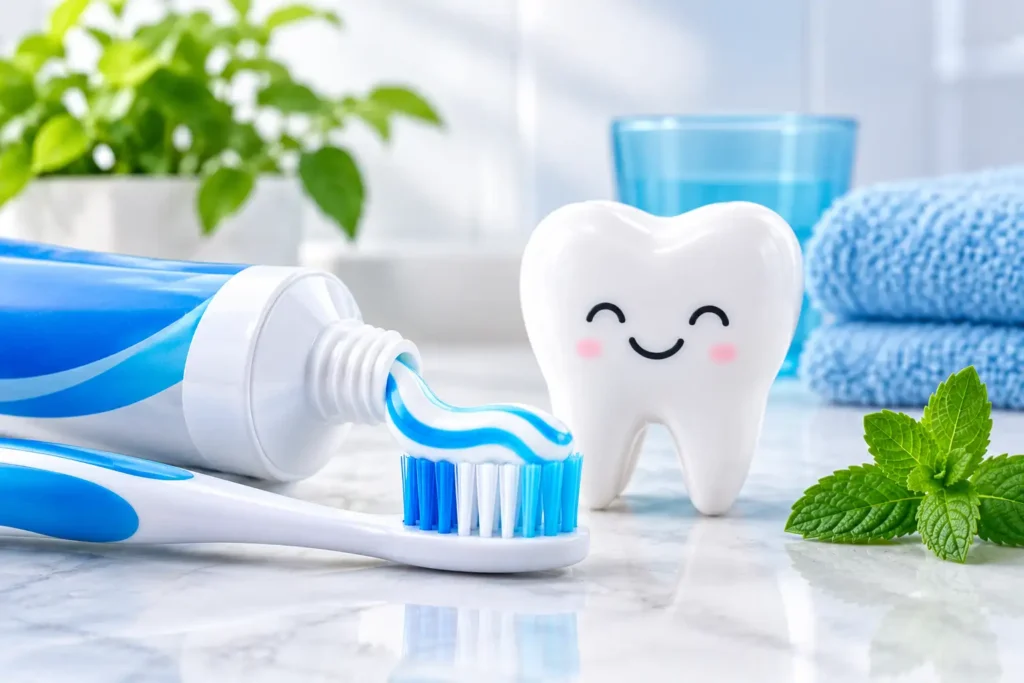
Toothpaste is an important part of daily oral care. When used with proper brushing, it helps clean the surface of the teeth, remove food particles, and reduce dental plaque.
How Does Toothpaste Protect Your Teeth?
Many toothpastes contain fluoride, which helps strengthen tooth enamel and makes it more resistant to acids produced by bacteria in the mouth. This can help reduce the risk of tooth decay and support long-term dental health.
Different Types of Toothpaste
Different toothpastes are designed for different needs. Some are made for sensitive teeth, some help control tartar buildup, and others focus on whitening, fresh breath, or gum care. Choosing the right toothpaste depends on individual oral-health needs.
What Do Toothpaste Colors Mean?
Toothpaste can be white, blue, green, pink, red, or multi-colored. These colors are usually related to the product’s appearance, flavor, or design and do not necessarily indicate its quality or effectiveness.
The small colored marks sometimes seen at the end of toothpaste tubes also do not show whether the toothpaste is natural or chemical. These marks are generally used during the manufacturing and packaging process.
Is Toothpaste Enough on Its Own?
Toothpaste is only one part of a complete oral-care routine. Good oral health also depends on regular brushing, cleaning between the teeth, limiting frequent sugary foods and drinks, and visiting a dentist for routine checkups.
For most people, brushing twice a day with a suitable toothpaste is an important step in maintaining healthy teeth and gums.
Choosing the Right Toothpaste
For many people, a fluoride toothpaste is a good choice for everyday use. However, people with tooth sensitivity, gum problems, or other specific dental conditions may benefit from using a toothpaste designed for those needs.
If you are unsure which toothpaste is suitable for you, a dentist or dental professional can help you choose the right option.
Conclusion
Toothpaste does more than simply freshen the mouth. It can help reduce plaque, protect tooth enamel, support healthier gums, and lower the risk of cavities when used as part of a consistent daily oral-care routine.